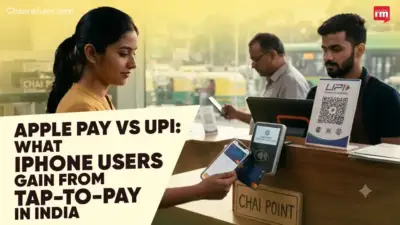

Apple Pay has entered India with a card-focused rollout, giving iPhone and Apple Watch users a new way to make contactless payments. At launch, the service supports eligible Axis Bank Visa and Mastercard credit cards, while UPI and RuPay are not supported.
The key difference is how the two systems work. Apple Pay turns an existing bank card into a secure digital payment credential on the iPhone or Apple Watch. Users can authenticate with Face ID, Touch ID or a passcode and tap the device at a compatible contactless card terminal. UPI, meanwhile, allows payments directly from bank accounts through QR codes, UPI IDs and other supported methods.
This means Apple Pay is unlikely to replace UPI in India. UPI remains the broader payment network for everyday transactions, including payments at small merchants, person-to-person transfers and bank-account payments. NPCI has also introduced UPI Tap and Pay, allowing compatible smartphones to make contactless payments using NFC without opening a UPI app.
Apple Pay's immediate advantage is convenience for card users. Instead of carrying a physical card, users can tap an iPhone or Apple Watch at contactless terminals. The service also adds a more seamless experience for online payments through Apple devices.
However, its initial reach is limited because only eligible Axis Bank Visa and Mastercard credit cards are supported. More banks are expected to be added later. India's growing credit-card market gives Apple an opportunity, with more than 120 million credit cards in circulation, but UPI continues to dominate everyday digital payments.
For iPhone users, the two systems therefore serve different purposes. Apple Pay is primarily a digital card wallet for fast, secure contactless payments, while UPI remains the more versatile option for QR payments, bank transfers and person-to-person transactions. The bigger opportunity for Apple could come if UPI support or wider NFC access is eventually added to the iPhone ecosystem.
For now, Apple Pay adds a new payment option to the iPhone rather than replacing India's UPI-first payment habit.